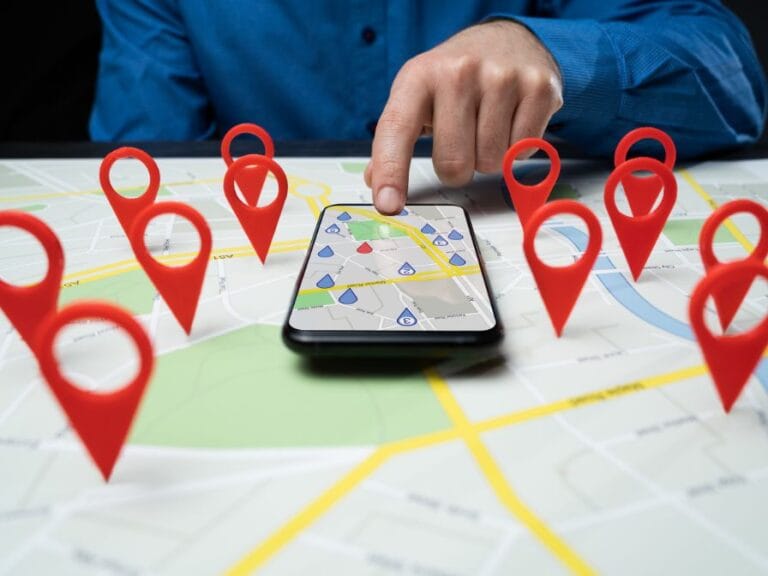

How Johor Bahru SMEs Can Rank #1 on Google Maps in 2026
Imagine a potential customer searching for your service on Google Maps at exactly the moment they’re ready to make a purchase—and your business shows up first. For small and medium-sized enterprises (SMEs) in Johor Bahru, this isn’t fantasy; it’s a very achievable reality. The Google Maps ranking phenomenon has transformed how local businesses attract customers, and in 2026, it’s more critical than ever.
With 46% of all Google searches now having local intent, the competition to rank on Google Maps has intensified significantly. Yet here’s the encouraging truth: you don’t need a massive marketing budget to win. SMEs that understand how to rank on Google Maps can compete directly with established competitors and capture a disproportionate share of local customers actively searching for their services.
This comprehensive guide will walk you through every proven strategy to help your Johor Bahru business claim that coveted position in the Google Maps local pack—those three highlighted business results that appear before organic listings. By implementing the strategies outlined here, you’ll not only improve your visibility but also build sustainable momentum in local search throughout 2026.
What Is the Google Maps Local Pack and Why Does It Matter?
The Google Maps local pack, often called the Local 3 Pack, is the most valuable real estate in local search. When someone searches for services like “electrical contractor Johor Bahru,” “restaurant near me,” or “best hair salon JB,” Google displays three businesses at the top of search results with a mini map showing their locations. This prime position generates substantial benefits that most SME owners don’t fully appreciate.
Research shows that businesses appearing in the local pack receive approximately 30% of all local search clicks—a staggering concentration of attention. What makes this even more compelling? These aren’t random visitors; they’re customers actively seeking what you offer, at the precise moment they’re ready to engage. For Johor Bahru SMEs, this translates into more phone calls, more foot traffic, and more qualified leads without relying on paid advertising.
The Map Pack’s dominance stems from Google’s mission to deliver the most relevant local results instantly. When a user conducts a local search, Google prioritises these three businesses because the algorithm believes they best match the user’s intent based on several sophisticated ranking factors. Unlike organic SEO, which can take months to show results, a well-optimised Google Business Profile can help you reach the Map Pack much faster, sometimes within weeks.
Beyond visibility, appearing in the local pack carries profound trust implications. Customers instinctively believe Google has vetted these businesses and highlighted the best options. This perception translates into substantially higher click-through rates and more conversions compared to businesses ranked outside the top three.
Understanding Google Maps Ranking Factors: The Three Pillars
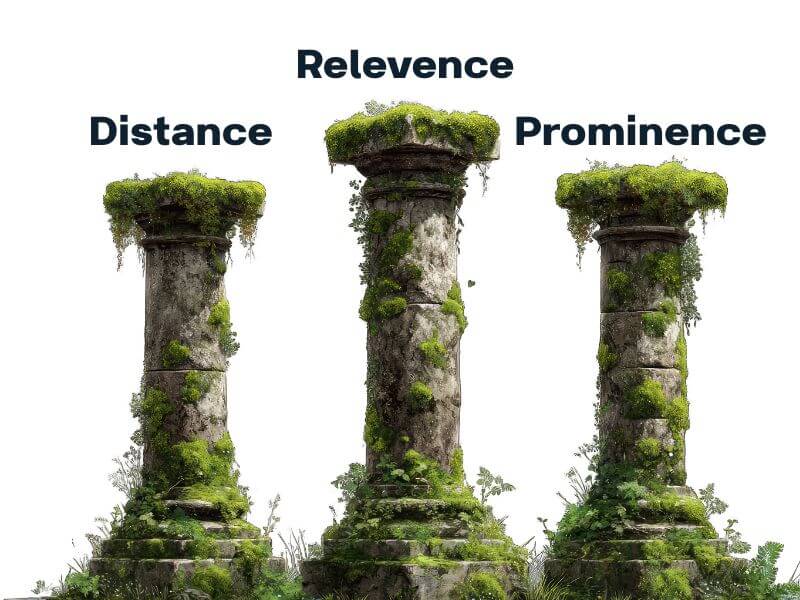
Google relies on three primary factors when deciding which businesses appear in the Map Pack. Understanding these isn’t optional—it’s essential for building a sustainable strategy that keeps your business visible throughout 2026 and beyond.
Relevance: Making Google Understand Your Business
Relevance measures how precisely your business matches what users are searching for. If someone searches for “accounting firm in Johor Bahru,” Google scans thousands of business profiles looking for signals that confirm you’re genuinely an accounting firm, not a general consulting business.
Your Google Business Profile category is the most important relevance signal. Choosing the right primary category—precise, specific, and accurate—directly influences which searches trigger your business. A pest control company should select “Pest Control Service” rather than the broader “Service Provider.”
Beyond categories, keyword signals throughout your profile communicate your specialisation. Your business description, services list, attributes, and even the language in customer reviews all contribute to relevance scoring. When someone searches “24-hour plumber Johor Bahru” and your description mentions those exact services, Google gains confidence in showing your profile.
The accuracy of your business information reinforces relevance. Inconsistent details confuse Google’s algorithm, reducing your chances of appearing for relevant searches. A business name written as “John’s Café” on Google Maps but “Johns Cafe” on your website signals confusion that can diminish your relevance score.
Distance: The Geographic Component
Distance, or proximity, represents where the searcher is located relative to your business. For “near me” searches, Google prioritises businesses physically closest to the user. You can’t change your location, but you can optimise how Google understands your service area.
For service-area businesses—plumbers, electricians, consultants, and similar trades—distance becomes more nuanced. You don’t need a physical storefront in every area you serve. Instead, clearly defining your service area in your Google Business Profile tells Google you’re relevant to searches across that entire region. A Johor Bahru-based consultant serving clients throughout Selangor and Johor can be found by prospects in multiple locations if their service area is properly configured.
Local phone numbers matter more than you might think. Using a toll-free number can slightly reduce your proximity relevance compared to displaying a Johor Bahru area code, signalling local presence to both algorithms and customers.
Prominence: Building Your Online Reputation
Prominence represents how well-known and well-regarded your business is online. This is where most SMEs can make the greatest impact, because prominence isn’t static—it’s built through consistent effort and customer engagement.
Review signals dominate prominence scoring. Google considers review quantity (more reviews signal popularity), quality (the sentiment and depth of reviews), and recency (recent reviews count more heavily). A business with 50 five-star reviews accumulated over two years ranks lower than a competitor with 40 recent five-star reviews from the last three months, assuming other factors are equal.
Your responsiveness to reviews matters significantly. Businesses that quickly respond to reviews—both positive and negative—signal to Google that they actively engage with customers. A one-hour response time to a critical review demonstrates professionalism that a three-week delay cannot match.
Beyond reviews, online citations (mentions of your business name, address, and phone number on local directories) strengthen prominence. Each consistent citation reinforces Google’s confidence in your legitimacy. Backlinks from reputable local websites, media coverage, and community involvement all contribute to prominence signals.
Why Johor Bahru SMEs Are Uniquely Positioned to Dominate Local Search
Johor Bahru presents a distinctive opportunity for SMEs that many business owners haven’t yet grasped. The economic landscape in Malaysia’s second-largest metropolitan area creates specific advantages for businesses that act strategically now, before competition intensifies.
The region’s rapid SME growth has created a gap: many businesses still treat their Google presence as a minor task or don’t optimise it effectively. This means less competition for premium Map Pack positions compared to saturated markets like Kuala Lumpur. SMEs that implement proper Google Maps SEO now will establish dominant positions before competitors catch up.
Johor Bahru’s unique customer behaviour patterns favour local search. Residents and business owners frequently search for nearby services before making purchasing decisions, creating consistent high-intent traffic. Unlike generic keyword searches where intent is uncertain, these local searches convert at significantly higher rates into actual business transactions.
Cross-border opportunities also exist. With Singapore just across the border, some Johor Bahru businesses serve international clients. Proper Google Maps optimisation helps these businesses capture both local Johor Bahru customers and travellers from Singapore searching for services in Johor Bahru.
Step 1: Claim, Verify, and Optimise Your Google Business Profile
Every successful Google Maps ranking strategy begins here. If you haven’t claimed your business on Google Business Profile (formerly Google My Business), you’re essentially giving competitors a head start.
Claiming Your Profile
Navigate to Google Business Profile and search for your business. If it already exists in Google’s system, click “Manage this business.” Google has already indexed most established businesses; you’re simply claiming ownership. If Google hasn’t found your business, click “Create account” and add your details.
Complete every field accurately. Your business name should match your official legal name exactly—avoid keyword stuffing or variations. Google flags suspicious naming patterns and may penalise profiles that include descriptive keywords in the business name field.
Verification: Proving Your Business Is Real
Google requires verification to prevent fraudulent listings. For some businesses, you’ll receive a postcard to your verified address within 2-3 weeks. Some service-area businesses can verify through live videos. Complete verification immediately, as unverified profiles have minimal ranking ability.
Your GBP is the foundation for all local search visibility. Once verified, your next critical step is ensuring your website complements your GBP. Your website must have proper SEO setup to validate your business profile and boost ranking potential.
NAP Consistency: Your Foundation
NAP consistency—ensuring your Name, Address, and Phone number match perfectly across all directories—is non-negotiable. Even small variations like “Jln” versus “Jalan” can confuse Google’s algorithms and weaken your rankings.
Conduct a comprehensive audit of where your business appears online:
- Google Business Profile and Google Search
- Bing Places for Business
- Apple Business Connect
- Yelp and industry-specific directories
- Local Malaysia business directories (yellow pages)
- Your own website
- Social media profiles
- Local chamber of commerce listings
- Any directory where you’ve been mentioned
Standardise all information to match exactly. Create a spreadsheet documenting each location and ensure quarterly updates as your information changes.
Selecting the Perfect Primary Category
Your primary category acts as a ranking trigger. Choose the most specific category that accurately describes your core business. A business offering both “General Contractor” and “Kitchen Remodeling” services should select “Kitchen Remodeling” as primary if that’s their main revenue driver.
Test category combinations quarterly using competitor analysis tools. Monitor whether changing your category selection affects your search impressions, then refine based on performance data.
Crafting a Description That Ranks
Your business description has a specific character limit—make those characters count. Front-load important information in the first 150 characters since that’s what appears in previews. Include your city name naturally; “We provide tax accounting services in Johor Bahru and surrounding areas” signals local relevance more effectively than “We provide tax accounting services”.
Avoid keyword stuffing, which violates Google’s guidelines. Use natural language that speaks to customer needs. Instead of repeating “accountant accountant accounting,” write: “Professional tax accounting services for SMEs and entrepreneurs, helping Johor Bahru business owners navigate compliance and maximise deductions.”

Step 2: Master the Art of Review Generation and Management
Reviews function as both social proof and ranking signals. This is where many SMEs leave tremendous ranking potential untapped.
Why Review Quantity and Recency Matter
Google’s algorithm weights recent reviews heavily. A business with 20 reviews accumulated over five years typically ranks lower than a competitor with 15 reviews from the last two months, assuming quality is similar. This means review generation shouldn’t be a one-time campaign; it should be an ongoing system.
The quantity threshold varies by competition level. In saturated markets, 50+ reviews might be necessary to rank well. In less competitive Johor Bahru sectors, 20-30 recent, high-quality reviews often suffice. Monitor your competitors to understand local benchmarks.
Systematising Review Requests
The most effective approach involves multiple touchpoints and channels:
At the point of transaction: For service-area businesses, request reviews immediately after completing work. For retail, ask at the checkout. For restaurants, request as guests finish dining. This captures customers while their experience is fresh and satisfaction is highest.
Email and SMS campaigns: Send follow-up requests 2-3 days after purchase or service completion. Include a direct link to your review page (shortened URLs work better for mobile: use Bitly or TinyURL). Personalised messages (“Thanks for choosing us for your kitchen renovation!”) outperform generic requests by 300%+.
QR codes: Display QR codes on receipts, business cards, and signage that link directly to your review page. This removes friction—customers can review in seconds without typing URLs.
Training your team: Empower every team member to request reviews conversationally. “We’d love your feedback on Google—it helps local customers find businesses like ours” feels authentic, unlike robotic requests.
Managing Reviews: Response Strategies
Speed matters: Aim to respond to all reviews within 24 hours. Google’s algorithm acknowledges response velocity; fast responders signal engagement. For Johor Bahru businesses, this often means checking reviews during morning coffee and lunch breaks.
Tone consistency: Develop response templates that feel personal yet professional. Negative reviews deserve special attention. A thoughtful response to a 2-star review—one that addresses the concern, offers solutions, and invites follow-up—transforms criticism into an opportunity to demonstrate your commitment.
Responding to positivity: Don’t neglect 5-star reviews. Simple replies like “Thank you so much! We appreciate your business and hope to see you again soon” reinforce the community and encourage repeat customers.
Learning from feedback: Compile review feedback monthly to identify service improvement opportunities. Customers often highlight problems you can fix. When reviews mention “slow response time,” that’s actionable data.
Advanced Review Tactics for Competitive Markets
Businesses in competitive categories can differentiate through review variety. Encourage diverse reviewers—customers of different demographics, service types, and backgrounds—to create a richer narrative. A plumbing company with reviews from residential homeowners, property managers, and commercial clients appears more capable than one with only residential reviews.
Step 3: Build Citation Authority and Online Consistency
Beyond Google, your online footprint tells Google’s algorithm whether your business is established, legitimate, and trustworthy.
Understanding Citations and Their Impact
A local citation is any online mention of your business’s NAP (Name, Address, Phone number). Citations serve as references validating your business’s legitimacy. When Google sees consistent information about your business across multiple authoritative sources, it gains confidence in ranking you higher.
Generic citations appear on national and global directories: Google Business Profile, Bing Places, Apple Business Connect, Yellow Pages, Better Business Bureau, and chamber of commerce websites. These carry significant weight because they’re widely recognised.
Niche citations appear in industry-specific directories. A law firm should appear on Avvo or Justia; a healthcare provider on Healthgrades; a restaurant on OpenTable. These demonstrate specialisation.
Location-based citations highlight your presence in specific areas. For Johor Bahru businesses, being listed in “Best Businesses in Johor Bahru” directories and local chamber listings strengthens local relevance.
Building a Citation Strategy
Priority one: Claim existing listings: Search for your business on major platforms. Many SMEs discover they’re already listed but unverified or claimed by competitors. Reclaim these immediately.
Priority two: Submit to authoritative directories: Create accounts on:
- Bing Places for Business
- Apple Business Connect
- Better Business Bureau
- yellowpages.my
- recommend.my
- Yelp
- Industry-specific directories
- Relevant local Malaysia business directories
Maintain perfect NAP consistency across all submissions. Even “Street” versus “St.” variations can weaken citations.
Priority three: Build natural citations: Seek features in local media, industry blogs, or community organizations. When a local news outlet writes about your business or a community group mentions you, these unpaid citations carry tremendous authority.
Step 4: Optimise Your Website for Local Search
Your Google Business Profile is half the equation; your website is the other half. Google cross-references your GBP with your website content, validating your local presence. A complete profile pointing to a weak website diminishes ranking potential.
For many SMEs, understanding how to implement proper website maintenance and WordPress optimization ensures your site stays current and continues supporting your local search visibility year-round.
On-Page Local SEO Elements
Title tags and meta descriptions: Include your location in title tags. “Professional Accounting Services Johor Bahru | Tax Planning & Compliance” performs better than “Professional Accounting Services.” Meta descriptions should also include location: “Expert tax accounting for Johor Bahru SMEs and entrepreneurs. Specialising in tax planning, compliance, and deduction maximisation.”
Headings and content: Use location-specific keywords in H2 and H3 headings. Instead of just “Services We Offer,” try “Tax Accounting Services in Johor Bahru” or “Bookkeeping Services for JB Small Businesses.”
Contact information: Display your full NAP prominently in the footer of every page in text format (not images). Include your phone number as a clickable phone link. Embed a Google Map on your contact page showing your exact location.
Location pages: If you serve multiple areas or have multiple locations, create dedicated pages for each. “Services in Johor Bahru,” “Services in Kota Iskandar,” etc., with unique content addressing local issues and landmarks.
Schema Markup for Local Validation
Implement LocalBusiness schema markup on your website. This code tells Google your exact business information, operating hours, service areas, and contact details. Google can pull this information automatically, validating your GBP. Tools like Schema.org provide templates; most WordPress themes include schema functionality.
Technical Local SEO
Local keyword targeting: Naturally incorporate location-based keywords throughout your content. Don’t overdo it (Google penalises keyword stuffing), but phrases like “Johor Bahru accounting,” “JB tax services,” and “electrical contractor near Meridian,” should appear in your content if they match customer search patterns.
Local content strategy: Create blog content addressing local issues, events, or opportunities relevant to your industry. A restaurant might write “5 Must-Visit Johor Bahru Dining Neighbourhoods” or “Local Food Festivals Coming to JB in 2026.”
Step 5: Leverage Local Content Marketing and Link Building

Content marketing and link building create authority signals that support your rankings across both Google Search and Google Maps. Building a consistent content strategy for your local business requires planning, execution, and regular updates. This is where many SMEs struggle—not from lack of understanding, but from lack of time.
Creating Location-Specific Content
Target long-tail keywords with local intent: “best plumber for house renovation in Johor Bahru,” “affordable accounting services JB,” “wedding photography near Kota Iskandar.”
Address local pain points. A pest control company could write “Rainy Season Pest Prevention: Johor Bahru Guide” or “The Top 3 Insect Problems in Johor Bahru Homes.” A fitness centre could create “Building Muscle in Tropical Climate: Johor Bahru Trainer Tips.”
Create content calendars incorporating local events and seasons. During Ramadan, Raya, and Chinese New Year, create location-specific content addressing holiday-related searches. “Gift Ideas for Corporate Clients During Raya” or “Lunar New Year Dinner Reservations in Johor Bahru” capture significant search volume during these periods.
Building Local Backlinks
Backlinks from local websites signal to Google that your business is integrated into the community. Strategies include:
Local sponsorships: Sponsor community events, sports teams, or charity initiatives. Ensure event websites link to your business.
Partnerships with complementary businesses: If you’re a decorator, partner with furniture retailers. Create co-marketing content where each business links to the other.
Local publication features: Pitch stories to local blogs, newsletters, and news outlets. “Local Business Spotlight” features often link to the featured company.
Chamber of commerce and business association listings: These typically include links to member websites, providing both citations and backlinks.
Community involvement: Write guest posts on local community blogs or industry newsletters. Each publication link strengthens your authority.
Step 6: Complete Your Google Business Profile Comprehensively
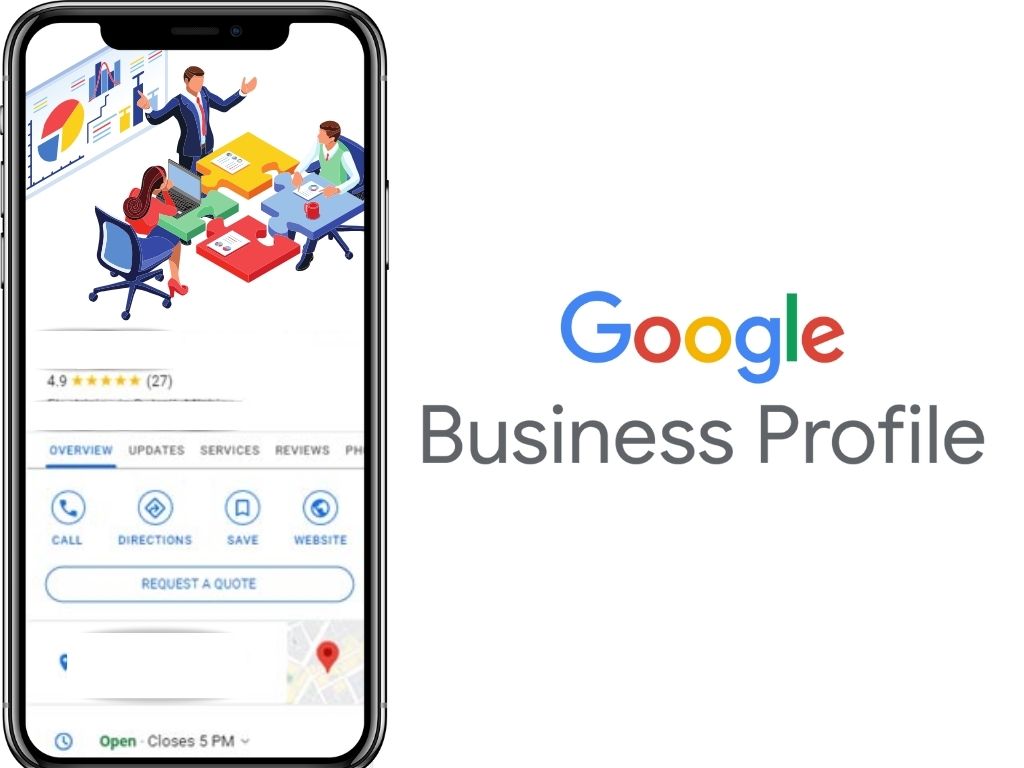
Many SME owners treat their Google Business Profile as barely adequate. The difference between a minimal profile and a comprehensive one is often a 2-3 position ranking improvement.
Photos and Videos: Visual Authority
Upload at least 10-15 high-quality photos showing:
- Your storefront or office entrance
- Your team in action
- Your products or services
- Your location’s unique features
- Customer testimonials (with permission)
- Recent projects or portfolio work
Videos perform exceptionally well. A 30-second video showcasing your service or facility typically generates 3-4x more engagement than photos alone.
Update photos monthly. Regular new content signals to Google that your business is active. Seasonal photos work particularly well—office decorated for holidays, summer products displayed, etc..
Services and Products Section
Don’t just list services; describe them. “Accounting” becomes “Tax Planning & Compliance, Bookkeeping, Payroll Management, GST & Tax Returns.” Add prices if applicable—transparency drives trust and reduces inquiry volumes from budget-mismatched prospects.
Test different service descriptions. Track which services generate the most customer actions (calls, bookings, reviews) and emphasise those in your profile.
Business Hours and Special Hours
Update your hours quarterly, accounting for seasonal variations. Many SMEs neglect holiday hours, confusing customers who arrive during closures. Use the “Special Hours” feature to mark extended hours during peak season or holidays.
Attributes and Features
Select applicable attributes: “Women-owned,” “Wheelchair accessible,” “Accepts credit cards,” “Offers delivery,” etc. Each attribute you accurately mark makes your profile match more customer search patterns.
Q&A Section
Actively manage the Q&A section. Answer every question within 24 hours. If a question suggests a service you offer, answer thoroughly—this content is highly visible in search results.
Posts and Updates
Post 2-4 times monthly. Mix promotional posts with valuable updates: “This Month’s Special,” “5 Tips for Choosing Your Service,” “Spotlight: Meet Our Team,” “New Service Launch,” etc. Regular posting signals activity.
Step 7: Monitor Performance and Continuously Optimise
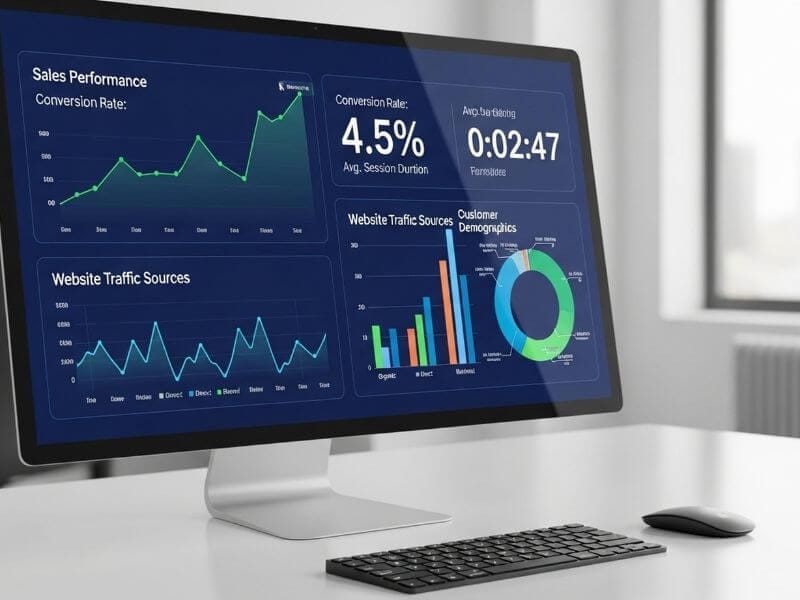
Successful Google Maps ranking isn’t “set it and forget it.” Markets change, competitors evolve, and algorithms update. Monthly monitoring reveals what’s working and identifies improvement opportunities.
Essential Metrics to Track
Search visibility: Use tools like GMB Everywhere to see your rankings at specific locations throughout Johor Bahru. Don’t just search your business on your own phone—your location history skews results.
Customer actions: Monitor GBP Insights data showing calls, direction requests, and website clicks. Track which days generate most inquiries—perhaps adjust posting schedule accordingly.
Review trends: Track monthly review volume, average rating, and sentiment. A sudden drop in review volume might indicate customers are having issues you need to address.
Traffic sources: Use UTM parameters on your GBP website link to track how much Google Maps traffic converts. Link to specific landing pages when possible, not just your homepage.
Competitor benchmarking: Monthly, search for your target keywords in different Johor Bahru locations. Which competitors consistently outrank you? What are they doing differently?
Seasonal Adjustments
Johor Bahru’s business patterns include seasonal variations. E-commerce businesses see spikes around Raya and Christmas. Service businesses might see reduced demand during monsoon season. Adjust content, special promotions, and posting frequency based on seasonal patterns.
Quick Takeaways
The path to Google Maps domination for your Johor Bahru SME involves executing these core strategies consistently:
- Complete optimisation of your Google Business Profile is the essential foundation—incomplete profiles cannot compete effectively in the Map Pack
- Review generation and management represent your highest-leverage activity; focus here before anything else
- NAP consistency across directories builds algorithmic trust, directly improving your ranking potential
- Website integration validates your profile; Google cross-references both when ranking businesses
- Content marketing addresses local search intent and builds authority through backlinks and engagement
- Monthly monitoring keeps you responsive to market changes and algorithm updates
- Long-term commitment rather than quick fixes—sustainable rankings require consistent effort over months, not weeks
Frequently Asked Questions
How long does it take to rank on Google Maps?
The timeline depends on competition level, current optimisation, and your industry. Businesses implementing strategies correctly often see movement into the Map Pack within 4-8 weeks. Highly competitive markets might require 3-6 months. Consistency matters more than speed; businesses that maintain effort see continued improvement over 6-12 months.
Can I use Google Maps SEO without a website?
While challenging, it’s possible. Your GBP can function as your primary online presence for service-area businesses. However, Google ranks websites more prominently when cross-referenced with GBP. A simple one-page website dramatically improves your competitive position.
What if my business doesn’t have a physical location?
Service-area businesses don’t need a storefront. Define your service area clearly in your GBP—specify the suburbs, cities, or radius you serve. Create location-specific pages on your website for each area you serve. This approach works exceptionally well for tradespeople, consultants, and mobile service providers in Johor Bahru.
How many reviews do I actually need?
No magic number exists. In less competitive Johor Bahru sectors, 15-20 recent reviews suffice. Competitive categories might require 50+. Focus on consistency—regular recent reviews outperform sporadic older reviews.
Do I need to respond to every review?
Yes, if possible. Responding to all reviews signals engagement to both Google’s algorithm and potential customers. Even if you can’t write lengthy responses, brief thank-you acknowledgments matter.
What’s the difference between Google Maps and Google Business Profile?
Google Maps is the app/website where customers find and navigate to your business. Google Business Profile is the tool you use to manage your business listing on Google Maps (and Google Search). Same information; different purpose.
Can I rank on Google Maps for multiple keywords?
Yes. Your categories, descriptions, and services all target different keyword combinations. A plumber ranks for “plumber JB,” “emergency plumbing,” “drain cleaning,” and similar variations based on these profile elements.
Conclusion
Ranking number one on Google Maps in 2026 is within reach for Johor Bahru SMEs that approach local SEO strategically. The businesses that will dominate are not necessarily the largest or most established—they’re the ones that optimise their online presence most effectively.
The competitive landscape is shifting. Customers increasingly rely on Google Maps to discover local businesses, and Google’s algorithm continues rewarding businesses that actively maintain their presence and engage with customers online. This creates an immediate opportunity for SMEs that act now, before saturation increases.
Your journey begins with one action: visiting Google Business Profile and claiming your business today. From there, implement the strategies in this guide systematically. Optimise your profile completely, generate reviews consistently, and maintain your information across directories. Track your progress monthly and adapt based on what the data reveals.
The businesses appearing in Johor Bahru’s Google Maps pack today were intentional about getting there. They understood that local SEO isn’t optional; it’s essential infrastructure for modern business. They committed to ongoing optimisation, reviewed their progress regularly, and made adjustments based on performance data.
Your path to Google Maps domination awaits. Start today—your future customers are searching right now.